Chinese Landscape Painting
Introduction
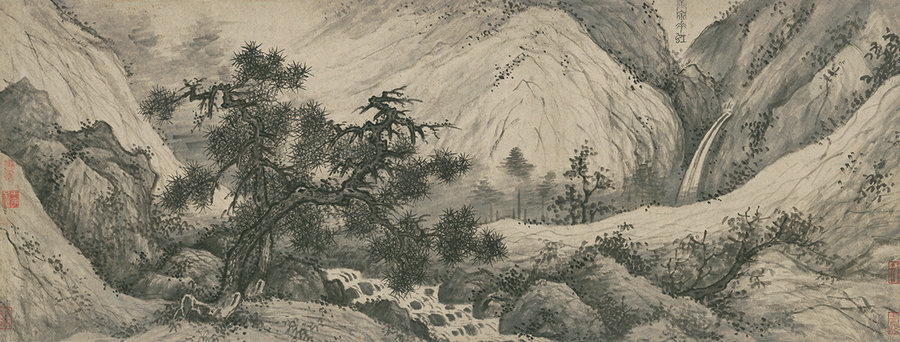
Chinese Landscape Painting, known as "Shanshui" (meaning "mountain-water"), represents a significant artistic tradition within Chinese cultural heritage, revered for its aesthetic beauty and philosophical depth. This art form transcends mere representation of nature, aiming instead to capture the spiritual essence and emotional resonance of landscapes through the use of ink and brush. Originating over a thousand years ago, Chinese landscape painting continues to influence both Eastern and Western art, embodying a harmonious relationship between humanity and nature.
History
Origins and Evolution
The roots of Chinese landscape painting can be traced back to the Wei (220-265), Jin (265-420), Southern and Northern Dynasties (420-581), an era that marked the beginnings of this genre as an independent art form. During this period, artists began to depict the natural world more frequently and with greater emphasis on capturing the spirit of the landscape rather than its physical form. As the art evolved through the Five Dynasties and Ten Kingdoms (907–960), it reached maturity during the Song Dynasty (960–1279), where landscape painting became the highest form of Chinese art. This progression is characterized by a shift from realistic depictions of nature to a more abstract and imaginative portrayal, reflecting philosophical and spiritual concepts.
Influential Dynasties
The Song Dynasty is considered the golden age of Chinese landscape painting, with significant contributions from artists such as Fan Kuan and Guo Xi. These painters emphasized grand, sweeping landscapes that conveyed the vastness and majesty of nature. The Yuan Dynasty (1271–1368) further developed the art form, with artists like Zhao Mengfu injecting a more personal and expressive style. The Ming (1368–1644) and Qing (1644–1911) dynasties continued to refine landscape painting, with a focus on stylistic diversity and technical innovation. The Southern School, characterized by a more expressive and lyrical approach, and the Northern School, known for its detailed and realistic style, both flourished during these periods.
Styles and Techniques
Brushwork and Composition
Chinese landscape painting is renowned for its distinctive brushwork, which relies on the manipulation of line, texture, and shading to convey depth and movement. Artists employ a variety of strokes, from fine, delicate lines to bold, sweeping ones, to create a sense of rhythm and balance within their compositions. The use of negative space is also crucial, allowing the viewer's imagination to complete the scene and emphasizing the emptiness as an integral part of the landscape. This compositional technique aligns with the Daoist philosophy of balance and harmony, where the interplay of yin and yang is reflected in the contrast between solid and void.
Use of Color and Ink
Traditional Chinese landscape paintings predominantly utilize ink, with color playing a secondary role. The monochromatic palette allows for subtle gradations and tonal variations, capturing the ethereal quality of mist, clouds, and distant mountains. When color is used, it is often applied sparingly and symbolically, enhancing the emotional impact of the image. The blue-green landscape style, originating in the Tang Dynasty(618-907), is one notable exception, characterized by the use of mineral pigments to create vibrant, jewel-like tones that evoke a fantastical and idealized vision of nature.
Prominent Artists
Fan Kuan, Guo Xi, and Ma Yuan are among the classical masters who have left an indelible mark on Chinese landscape painting. Fan Kuan's "Travelers Among Mountains and Streams" is a monumental work that exemplifies the grandeur of Song Dynasty landscapes, with its towering mountains and intricate detail. Guo Xi's "Early Spring" captures the transformative power of nature through its dynamic composition and fluid brushwork. Ma Yuan, a Southern Song painter, is renowned for his poetic and intimate landscapes, which often feature solitary figures immersed in contemplation.
Cultural Significance
Chinese landscape painting holds immense cultural significance as a reflection of the philosophical and spiritual beliefs of the Chinese people. It embodies the concepts of balance, harmony, and the unity of humanity and nature, central to both Daoism and Confucianism. The mountains and waters depicted in these paintings are not merely physical entities but are imbued with symbolic meaning, representing the ideal world in which humans coexist peacefully with the natural environment. This art form has also served as a meditative practice, allowing both artists and viewers to engage in introspection and to cultivate a sense of tranquility and enlightenment.
Influence on Other Art Forms
The aesthetic principles and techniques of Chinese landscape painting have influenced a wide range of other art forms, including poetry, calligraphy, and even Western art. The seamless integration of visual and literary elements in Chinese paintings often corresponds with poetic themes, creating a multisensory experience that transcends the visual plane. The brushwork and compositional methods have also inspired Western artists, particularly during the 19th and 20th centuries, when the simplicity and expressive power of Chinese art captured the imagination of Impressionists and modernists alike.








